Certificate
We are prequalified as an Approved Vendor of ADNOC adnoc certified company

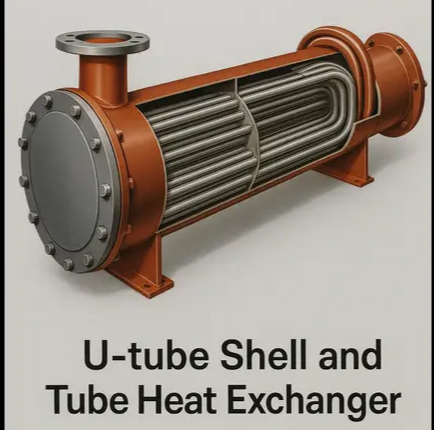
U-Tube Shell and Tube Heat Exchanger

U-tube shell and tube heat exchanger

U-Tube Shell and Tube Heat Exchanger

1. Introduction

Heat exchangers are machines that help move heat from one fluid to another without mixing them. They are used in many industries to save energy and control temperatures.

One common type is the shell and tube heat exchanger. It has tubes inside a big shell, where one fluid flows through the tubes and the other flows around them.

A special kind of this is the U Tube Shell and Tube Heat Exchanger. The tubes are bent in a U shape, which helps the machine handle heat changes better and last longer.

This blog will explain what a U Tube Shell and Tube Heat Exchanger is, how it works, and why it is important in different industries.


2. What is a U Tube Shell and Tube Heat Exchanger?

A U-tube shell and tube heat exchanger is a type of heat exchanger where a bundle of tubes is bent into a "U" shape, and one fluid flows through the tubes while another flows around them in a shell. This design allows the tube bundle to handle thermal expansion without the need for separate expansion joints because the U-bend can flex freely. This makes the unit suitable for applications with significant temperature differences.

3. Components of a U Tube Shell and Tube Heat Exchanger

A U Tube Shell and Tube Heat Exchanger is made up of several important parts that work together to transfer heat efficiently between two fluids. The key components include the shell, U-shaped tubes, and tube sheets.

  • Shell: This is the outer cylindrical vessel that holds one of the fluids. It surrounds the tube bundle and keeps everything contained inside the heat exchanger.
  • U-Tubes: These are continuous tubes bent into a “U” shape. One fluid flows inside these tubes, while the other fluid flows outside the tubes, inside the shell. The U-shape helps the tubes expand and contract with temperature changes without damaging the system, eliminating the need for expansion joints.
  • Tube Sheets: These are thick plates with many holes that firmly hold the tubes in place at both ends. They also help seal the tubes to prevent fluid leaks.
  • Headers (Channels): Located at each end of the U-tube bundle, headers serve as entry and exit points for the fluid flowing inside the tubes. The fixed head is on one side, while the U-bend side remains open to allow fluid flow.

Supporting Components of a U Tube Shell and Tube Heat Exchanger

Besides the core parts, the heat exchanger also contains additional components that improve performance and safety:

  • Baffles: These are metal plates inside the shell that direct the fluid flowing around the tubes. Baffles increase turbulence, which boosts heat transfer efficiency by forcing the shell-side fluid to flow across the tubes more effectively.
  • Nozzles: Nozzles are the inlet and outlet connections for both the shell-side and tube-side fluids. They allow fluids to enter and leave the heat exchanger safely and efficiently.
  • Tie Rods and Spacers: These parts hold the baffles firmly in place and keep the tube bundle stable, preventing movement and vibration during operation.
  • Thermal Insulation: Insulation is applied around the shell’s outer surface to reduce heat loss or gain from the surrounding environment. This helps maintain energy efficiency in the heat exchanger system.

4. Working Principle

A U Tube Shell and Tube Heat Exchanger transfers heat between two fluids without letting them mix. One fluid, usually hot, flows inside the U-shaped tubes, while the cooler fluid flows around these tubes inside the shell. Heat moves from the hotter fluid to the cooler fluid through the tube walls by conduction and convection.

Detailed Working Principle

  • Fluid Flow: The hot fluid enters the heat exchanger and travels through the U-shaped tubes. Meanwhile, the cooler fluid enters the shell and moves around the outside of the tubes.
  • Heat Transfer: As the hot fluid flows through the tubes, it releases heat to the tube walls. This heat passes through the tube walls and warms the cooler fluid flowing on the shell side.
  • Heat Exchange: The difference in temperature between the hot and cold fluids drives this heat transfer process. The U-shaped tubes allow for a compact heat exchanger design, housing the entire tube bundle inside one shell.
  • Fluid Separation: The solid tube walls act as a barrier, making sure the hot and cold fluids don’t mix.
  • Outlet: After exchanging heat, the cooled hot fluid leaves the tubes, and the warmed cold fluid exits from the shell side.

Key Features of the U-Tube Design

  • Compact Size: The U-tube heat exchanger takes up less space compared to straight-tube designs while providing the same heat transfer surface area.
  • Thermal Expansion: The U-shape design naturally allows the tubes to expand and contract due to temperature changes without causing stress or damage to the system.
  • Easy Maintenance: The U-tube bundle can often be removed from the shell for cleaning or maintenance, improving serviceability.
  • Best for Clean Fluids: Because cleaning the inside of the U-shaped tubes can be challenging, these heat exchangers are typically used for fluids that don’t cause fouling or dirt buildup.

5. Difference Between U Tube Shell and Tube Heat Exchanger and Straight Tube Heat Exchanger

Understanding the difference between U-Tube Shell and Tube Heat Exchangers and Straight Tube Heat Exchangers is essential for choosing the right heat exchanger for specific industrial applications. Both types are designed to transfer heat between two fluids, but their construction and performance characteristics differ significantly. Here’s a breakdown of the key areas of coverage to help you understand the differences:

1. Basic Structure and Design

  • U-Tube Shell and Tube Heat Exchanger: The U-tube design features a set of curved tubes that allow for flexibility. The "U" shape is ideal for handling thermal expansion without causing damage to the system.
  • Straight Tube Heat Exchanger: This design uses straight tubes for fluid flow. These are simpler and easier to clean, but lack the flexibility of U-tube designs.

2. Thermal Expansion Handling

  • U-Tube Heat Exchanger: The U-shaped tubes allow for easier expansion and contraction of materials when temperature changes occur, reducing the risk of damage due to thermal stress.
  • Straight Tube Heat Exchanger: Since the tubes are straight, these exchangers might be less adaptable to thermal expansion unless specially designed for such conditions.

3. Maintenance and Cleaning

  • U-Tube Heat Exchanger: Maintenance can be challenging because of the curved shape of the tubes, which makes access for cleaning or repairs difficult.
  • Straight Tube Heat Exchanger: The straight tubes are much easier to access, making cleaning and maintenance simpler and more efficient.

4. Heat Transfer Efficiency

  • U-Tube Heat Exchanger:Straight Tube Heat Exchanger:

    5. Pressure and Temperature Resistance

    • U-Tube Heat Exchanger: These exchangers are often more durable in high-pressure or high-temperature settings due to their ability to handle stress from thermal expansion and contraction.
    • Straight Tube Heat Exchanger: While reliable, straight tube heat exchangers may be more suitable for moderate temperature and pressure conditions. High-pressure and high-temperature scenarios may require additional reinforcement.

    6. Application Suitability

    • U-Tube Heat Exchanger: These are typically used in industries like chemical processing, petrochemicals, and power generation, where high pressures, temperatures, and thermal expansion are common.
    • Straight Tube Heat Exchanger: They are more suited to HVAC systems, food processing, and other low to moderate stress applications where ease of cleaning is a priority.

    7. Cost and Installation

    • U-Tube Heat Exchanger: These can be more expensive to install and maintain due to the complex design and additional features that accommodate thermal expansion.
    • Straight Tube Heat Exchanger: Often less expensive to install and maintain, making them a more cost-effective solution for systems with lower thermal or mechanical stress.

    Choose a U-Tube Heat Exchanger for high temperatures, pressures, and thermal expansion; opt for a Straight Tube Heat Exchanger for easier maintenance and lower-stress applications, ensuring optimal heat transfer efficiency.


    6. Advantages of U Tube Shell and tube Heat Exchanger

    A U Tube Shell and Tube Heat Exchanger is a popular choice in many industries because of its strong, efficient, and space-saving design. It offers several benefits, especially when dealing with high temperatures and pressures. The U-tube layout helps manage thermal expansion and makes maintenance easier, all while providing excellent heat transfer performance.

    Key Benefits of U Tube Shell and Tube Heat Exchangers

    • Thermal Compensation: The U-shaped tubes can expand and contract as temperatures change. This helps prevent stress or damage from thermal expansion, making the heat exchanger more reliable over time.
    • Cost-Effective Design: With only one tube sheet (compared to two in straight-tube designs), the U-tube heat exchanger is simpler and more affordable to build and maintain.
    • Easy Maintenance: The entire tube bundle can be pulled out of the shell for cleaning or inspection. This makes servicing the exchanger quicker and more convenient.
    • Handles High Pressure and Temperature: Thanks to its durable construction, this type of heat exchanger can safely operate under extreme pressure and high-temperature conditions.
    • High Heat Transfer Efficiency: The design promotes efficient heat exchange by supporting a high heat transfer coefficient. This improves energy use and overall system performance.
    • Good Hydraulic Performance: The layout allows for smooth fluid flow with low flow resistance, which reduces energy loss and boosts operational efficiency.
    • Compact Footprint: For the same amount of heat transfer surface area, the U-tube design is more compact than many other types. This makes it ideal for places where space is limited.
    • Reduced Risk of Leaks: Having only one tube sheet and fewer joints helps lower the chances of leaks, improving system safety and reliability.
    • Durability and Long Life: The strong, simple design leads to greater durability and longer service life, even under tough working conditions.

    7. Applications of U Tube Shell and Tube Heat Exchangers

    U Tube Shell and Tube Heat Exchangers are widely used across industries for heating, cooling, and condensing fluids. Their unique U-shaped tube design allows them to handle thermal expansion without the need for special joints. This makes them ideal for high-temperature applications and systems that require clean fluids, such as in HVAC, power generation, chemical processing, and food production.

    Common Applications by Industry

    1. HVAC Systems

    In heating, ventilation, and air conditioning (HVAC), U tube heat exchangers help control temperature by transferring heat between indoor and outdoor air or fluids. They are used in both commercial buildings and industrial facilities for efficient thermal management.

    2. Power Generation

    In power plants, these heat exchangers are critical for tasks like steam generation, steam condensing, and cooling turbines. Their ability to handle high pressure and temperature makes them key to improving energy efficiency.

    3. Oil and Gas Industry

    Used in oil refineries and processing plants, U tube shell and tube exchangers are involved in crude oil preheating, cooling, distillation, and desalting processes. Their durability and efficiency under harsh conditions make them a reliable choice.

    4. Chemical Processing

    In the chemical and petrochemical industries, these exchangers are essential for heating, cooling, and condensation during production. Their ability to maintain tight temperature control ensures product quality and safety.

    5. Food and Beverage Production

    Used for pasteurization, cooling, and heating, U tube heat exchangers support clean and sanitary processing, which is vital for handling food-grade fluids.

    6. Pharmaceutical and Biotech

    In these industries, U-tube exchangers are used for applications like steam-to-water heating, clean-in-place (CIP) systems, and temperature-sensitive processes that demand a sterile and efficient environment.

    Why U Tube Heat Exchangers Are Chosen?

    • Manages Thermal Expansion Naturally: The U-shaped tube design flexes with temperature changes, allowing for safe expansion and contraction without added components like expansion joints.
    • Simpler, Compact Design: With only one tube sheet and tight shell-to-bundle clearances, the U-tube design reduces size and simplifies construction, which can lower production and maintenance costs.
    • Best for Clean Fluids: Because cleaning the inside of the curved tubes is difficult, these heat exchangers are typically used when the fluid inside the tubes is clean or non-fouling.

    U Tube Shell and Tube Heat Exchangers are valued for their durability, compact size, and ability to withstand extreme temperatures and pressures. Whether used for industrial cooling, steam condensing, or sanitary food processing, they remain a top choice in many sectors.


    8. Design Considerations

    Designing a U Tube Shell and Tube Heat Exchanger requires careful planning to ensure strong thermal performance, mechanical safety, and practical operation. These heat exchangers are widely used in industries like power generation, HVAC, oil and gas, and chemical processing. Choosing the right design helps improve efficiency, reliability, and lifespan.

    Key Factors in U Tube Heat Exchanger Design

    1. Thermal Performance

    Heat Transfer Area: The required heat transfer surface area depends on the heat load and the heat transfer coefficient. You can increase the area by adjusting tube length, shell diameter, or number of passes.

    Fluid Allocation: Fluids with higher fouling or corrosion potential are often placed on the shell side, since it’s easier to clean than the inside of the U-tubes.

    Tube-Side Velocity: A velocity of 1 to 10 ft/s (0.3 to 3 m/s) helps balance heat transfer with pressure drop. More passes can increase flow speed and improve heat transfer if needed.

    Shell-Side Design: Baffles are placed inside the shell to direct fluid flow, create turbulence, and improve heat transfer. Common types include segmental baffles, where spacing and cut size help control pressure drop and vibration.

    2. Mechanical Design and Material Selection

    Material Selection: Materials must offer corrosion resistance, mechanical strength, and good thermal conductivity. Choices depend on the fluids and operating conditions.

    Tube Size and Layout:

    • Diameter: A common outer diameter is 19.05 mm (¾ inch).
    • Wall Thickness: Determined by pressure codes to withstand internal pressure.

    Layout Pattern:

    • 30° layout = higher heat transfer, harder to clean.
    • 45° or 90° layout = easier to clean, slightly less efficient.

    Tube Pitch: Typically, 1.25 times the tube diameter. More space may be needed if mechanical cleaning is required.

    Shell and Header Types:

    • U-Tube Design: The entire tube bundle is bent in a U-shape, which handles thermal expansion without extra joints or a floating head. However, the inside of the tubes is hard to clean mechanically, so the tube-side fluid should be clean.
    • Nozzles and Impingement Protection: Nozzles must be properly placed and sized to allow smooth fluid entry/exit. Use impingement plates to protect tubes from direct high-velocity fluid impact.

    Codes and Standards: Ensure the exchanger meets industry standards like those from TEMA (Tubular Exchanger Manufacturers Association) and other relevant codes.

    3. Operational Considerations

    Maintenance and Cleaning: The U-tube bundle can be pulled out for cleaning, but the curved part of the tubes cannot be cleaned with mechanical tools. This makes U-tube exchangers ideal for clean, low-fouling fluids.

    Pressure Drop: Keep both shell-side and tube-side pressure drops within limits. High pressure drop can reduce flow efficiency and increase pump costs.

    Space Limitations: The compact U-tube design is great for tight spaces and skid-mounted systems.

    Design Flexibility: For changing process conditions, the design should allow for thermal variation, load fluctuations, and potential expansion needs.


    9. Common Problems and Troubleshooting

    Even though U Tube Shell and Tube Heat Exchangers are reliable and widely used, they can still face operational problems over time. Issues like fouling, corrosion, leaks, and thermal stress can reduce performance or cause damage. Regular troubleshooting and preventive maintenance are key to keeping the system running efficiently.

    Common Problems and Their Solutions

    Problem What It Is Troubleshooting and Solution
    Fouling / Scaling Buildup of dirt, minerals, or deposits on the inside or outside of the tubes. Inspect for visible deposits. Clean tubes using high-pressure water, chemicals, or scrapers. Maintain proper flow rates to avoid stagnation.
    Corrosion Tube material degrades due to chemical reactions with fluids. Check for rust or pitting. Replace damaged tubes. Use corrosion-resistant materials. Monitor and adjust fluid chemistry.
    Leaks Fluids escaping through cracks or damaged seals. Look for wet spots or pressure drops. Check gaskets, seals, and tube ends. Replace faulty parts immediately.
    Vibration Shaking caused by uneven flow, loose parts, or poor design. Inspect for loose baffles or misaligned tubes. Ensure flow rates are within safe limits. Balance rotating components if needed.
    Thermal Expansion Stress Stress from temperature differences bending or damaging tubes. Avoid shutting off hot fluids suddenly. Use flexible designs and temperature-resistant materials. Review design limits for thermal expansion.

    General Troubleshooting Steps

    To prevent serious damage and keep your heat exchanger running smoothly, follow these routine steps:

    • Visual Inspection
      • Check for visible damage like bent tubes, corrosion, or loose parts.
      • Look for leaks or signs of wear on gaskets and seals.
    • Review Operating Data
      • Compare actual pressure, temperature, and flow rates with design specifications.
      • Deviations can point to fouling, blockage, or leaks.
    • Check Fluid Conditions
      • Ensure both shell-side and tube-side fluids stay within the correct temperature and flow ranges.
      • This prevents erosion, scaling, and thermal stress.
    • Schedule Regular Maintenance
      • Clean tubes and shell areas on a regular basis.
      • Replace worn-out parts like gaskets or seals before they fail.

    U Tube Shell and Tube Heat Exchangers are dependable, but like any equipment, they need regular attention. By understanding common problems like fouling, corrosion, and thermal stress—and taking action early—you can extend the life of the exchanger, boost efficiency, and avoid costly downtime.


    10. Maintenance Tips

    Regular maintenance is essential for keeping a U Tube Shell and Tube Heat Exchanger running safely and efficiently. Cleaning, inspecting, and replacing worn parts helps prevent breakdowns, extend equipment life, and maintain top performance. Below is a simple guide to the key maintenance tasks.

    1. Cleaning and Flushing

    Keeping both the tube side and shell side clean is critical for good heat transfer and smooth operation.

    • Perform Chemical and Mechanical Cleaning
      • Remove fouling like scale, sludge, or biofouling using tools such as:
        • Hydroblasting (high-pressure water)
        • Brushes and scrapers
        • Approved chemical cleaning solutions
    • Use Compatible Cleaning Agents
      • Always choose cleaning chemicals that match the metal type of your heat exchanger to prevent damage or corrosion.
    • Rinse Thoroughly
      • After chemical cleaning, flush the system with clean water to remove all leftover chemicals and debris.
    • Clean U-Tube Bends Carefully
      • These bends are hard to reach with mechanical tools, so chemical cleaning is often the most effective method.

    2. Inspection and Leak Detection

    Regular inspections help catch early signs of wear, damage, or leaks before they lead to failure.

    • Visual Inspection
      • After cleaning, check for corrosion, cracks, pitting, or fouling that may still remain inside the tubes or shell.
    • Leak Testing
      • Use dye penetrant, vacuum tests, or pressure tests to detect small leaks—especially after repairs or reassembly.
    • Use a Borescope
      • For internal inspection of U-tubes, a borescope helps view hard-to-reach areas clearly.
    • Non-Destructive Testing (NDT)
      • Advanced tools like:
        • Ultrasonic Thickness Testing (for checking wall thinning)
        • Eddy Current Testing (to detect hidden corrosion or cracks)

    3. Replacement and Reassembly

    Replacing worn parts and reassembling carefully helps ensure long-term reliability.

    • Replace Gaskets
      • Always check and replace old, cracked, or incompatible gaskets to ensure leak-free operation.
    • Clean Mating Surfaces
      • Clean flange surfaces before installing new gaskets to prevent sealing problems.
    • Proper Bolt Torque
      • Use a torque wrench to tighten bolts evenly to the manufacturer’s recommended settings.

    4. Safety and Documentation

    Always prioritize safety and keep track of your maintenance work.

    • Follow Safety Procedures
      • Wear PPE like gloves, goggles, and boots.
      • Never work on the exchanger while it’s pressurized or hot.
    • Depressurize the Unit First
      • Always fully depressurize and drain the exchanger before starting any maintenance.
    • Document All Work
      • Keep records of:
        • Cleaning methods used
        • Repairs and part replacements
        • Inspection results
      • This helps plan future maintenance and identify recurring issues.

    A well-maintained U Tube Shell and Tube Heat Exchanger runs more efficiently, lasts longer, and avoids costly breakdowns. By following regular cleaning, inspection, and safety routines—and documenting every step—you can keep your system in top condition for years to come.


    11. Conclusion

    At United Cooling Systems, we understand the vital role that U Tube Shell and Tube Heat Exchangers play across industries—from power generation and chemical processing to HVAC and food production. Their compact design, thermal efficiency, and ability to handle high temperatures and pressures make them a trusted choice for many demanding applications.

    However, to get the most out of these systems, proper design, regular maintenance, and timely troubleshooting are key. That’s why we focus not only on delivering high-quality heat exchangers but also on helping our clients maintain them for long-term, reliable performance.

    Whether you're looking to install a new unit, upgrade an existing one, or develop a preventive maintenance plan, we’re here to support you every step of the way—with expert engineering, premium materials, and proven performance.


    12. FAQs

    1. Is it easy to clean U Tube heat exchangers?

    Cleaning U Tube heat exchangers can be more challenging than cleaning straight-tube designs. The U-bend section is hard to reach with mechanical tools, so chemical cleaning is often required. For systems using clean fluids, U Tube designs are ideal. Regular maintenance and using the right cleaning agents make the process easier and more effective.

    2. What is the difference between U Tube and straight tube heat exchangers?

    The main difference lies in tube design and flexibility.

    • U Tube heat exchangers have a single tube sheet and a curved U-shaped tube bundle. They are compact, handle thermal expansion better, and are cost-effective.
    • Straight tube exchangers have two tube sheets and allow easier mechanical cleaning, especially for dirty or fouling fluids, but they require expansion joints to manage thermal stress.

    3. How does U Tube design handle thermal expansion?

    The U-shaped tubes naturally bend and flex as temperatures change. This design allows the tubes to expand and contract freely without causing stress on the materials or joints. As a result, U Tube Shell and Tube Heat Exchangers can operate under high-temperature conditions without needing separate expansion joints.

    4. What is a U Tube heat exchanger?

    A U Tube Shell and Tube Heat Exchanger is a type of heat exchanger where the tubes are bent into a "U" shape and held within a shell. One fluid flows through the U-tubes, and the other flows around them inside the shell. This design supports efficient heat transfer, compact size, and thermal flexibility.

    5. When should you use a U Tube heat exchanger?

    U Tube heat exchangers are best for applications where:

    • The tube-side fluid is clean,
    • High thermal expansion is expected,
    • Space is limited,
    • Cost-effective, compact solutions are needed.

    Industries like power plants, HVAC systems, chemical processing, and oil refineries frequently use this design.

    6. What are the advantages of a U Tube Shell and Tube Heat Exchanger?

    • Handles thermal expansion naturally
    • Compact and space-saving
    • Durable under high pressure and temperature
    • Cost-effective due to single tube sheet
    • Removable tube bundle for easier maintenance

    7. Can U Tube heat exchangers be used for dirty fluids?

    Not ideal. The U-bends in the tubes are difficult to clean mechanically, so U Tube exchangers are better suited for clean fluids. For dirty or fouling fluids, a straight tube exchanger may be a better choice due to easier access for cleaning.

    8. How often should a U Tube heat exchanger be cleaned?

    Cleaning frequency depends on the application and fluid type. In general:

    • For clean fluids, cleaning can be done annually or during scheduled shutdowns.
    • For fouling-prone systems, inspections and cleaning may be needed more often, possibly every few months.

    9. How long does a U Tube heat exchanger last?

    With proper maintenance, a U Tube Shell and Tube Heat Exchanger can last 15 to 30 years or more. Factors like fluid type, material selection, and operating conditions can impact lifespan.

    10. What standards apply to U Tube heat exchanger design?

    Most U Tube heat exchangers are designed according to:

    • TEMA (Tubular Exchanger Manufacturers Association) standards
    • ASME Section VIII (for pressure vessels)

    These standards ensure safety, performance, and durability.

    11. What is a U-tube bundle heat exchanger?

    A U-tube bundle heat exchanger is a type of shell and tube heat exchanger where the tubes are bent into a "U" shape. This design allows the bundle to expand and contract with heat, making it ideal for high-temperature applications. One fluid flows through the U-tubes, while another flows around them inside the shell.