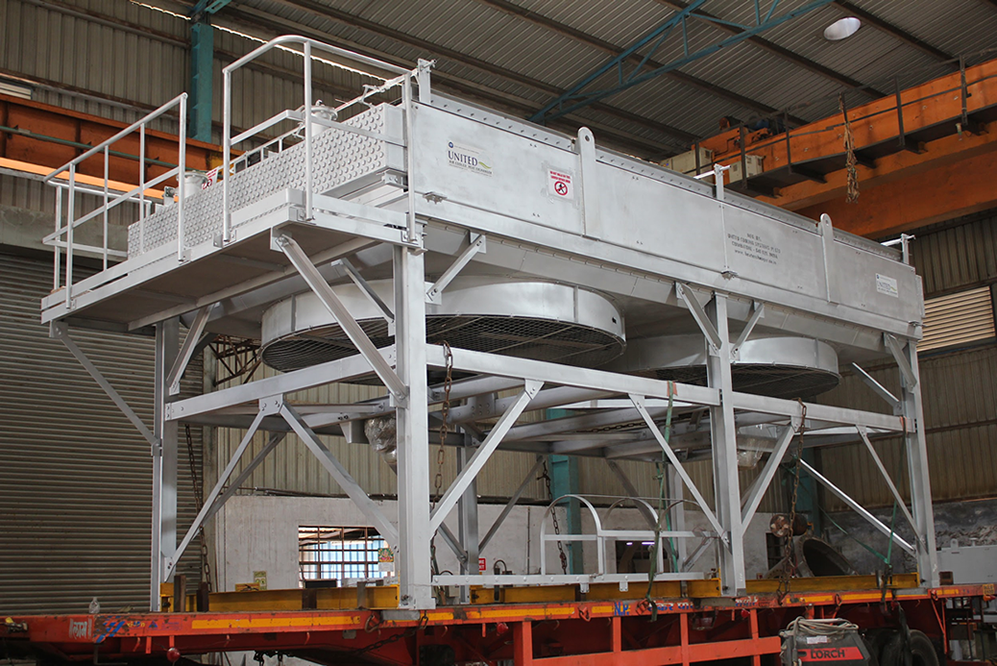
Air Cooled Heat Exchanger
1. Introduction
In industries like oil and gas, power plants, chemical processing, and HVAC, managing heat efficiently is a constant challenge—especially in locations where water is scarce or expensive. Engineers and plant managers often face real problems such as high energy costs, equipment downtime, corrosion, and poor cooling performance.
Selecting, designing, and maintaining the right air-cooled heat exchanger (ACHE) is critical to solving these challenges.
This content is designed for industrial professionals, mechanical engineers, and maintenance planners who want practical, actionable information. You will learn:
- How ACHEs transfer heat effectively and the factors that affect their cooling efficiency.
- Types of ACHEs and which designs suit different industrial cooling applications.
- Design and selection considerations, including material choice, airflow, fan selection, heat load calculations, and site-specific limitations.
- Maintenance best practices to prevent fouling, corrosion, and unexpected downtime.
- Advantages and limitations so you can make informed decisions about cost, reliability, and operational performance.
By the end, you will understand how to choose, design, and maintain the best air-cooled heat exchanger that saves water, energy, and operational costs while delivering reliable cooling in harsh industrial environments. This guide is ideal for professionals seeking practical solutions, ACHE design optimization tips, step-by-step calculations, and maintenance strategies—all tailored for real-world industrial needs.
2. What is an Air-Cooled Heat Exchanger?
An air-cooled heat exchanger (ACHE) is a device that removes heat from a hot fluid using air instead of water. It transfers heat through finned tubes, where fans blow ambient air across the tubes to carry heat away from the fluid.
Air-cooled heat exchangers are commonly used in industries like oil and gas, power generation, chemical processing, HVAC, and manufacturing, especially where water is limited or costly. They are ideal for cooling process fluids, condensing steam, and controlling industrial temperatures.
3. How Does an Air Cooled Heat Exchanger Work?
An air-cooled heat exchanger (ACHE) cools hot fluids by transferring heat to air. The hot fluid flows through finned tubes, and fans push or pull air over the tubes. Heat moves from the fluid to the tube walls, then to the fins, and finally to the air, which carries it away. This is a common method in industrial cooling systems, HVAC, and chemical plants.
Step-by-Step Process
- Hot fluid enters: The hot process fluid enters a bundle of finned tube heat exchanger tubes.
- Heat transfer happens: Heat moves from the fluid to the metal tubes. The fins attached to the tubes increase the surface area and make heat transfer more efficient. This is important in the design calculation of air-cooled heat exchangers.
- Air flows over tubes: Fans move ambient air over the tubes. Fans can be forced draft (pushing air) or induced draft (pulling air). The plenum chamber guides the air so it flows evenly over the tube bundle.
- Heat is released: The air absorbs the heat from the fins and moves out of the unit. This step helps cool the fluid and is key to energy-efficient heat dissipation.
- Cooled fluid exits: The cooled fluid leaves the exchanger and moves to the next part of the industrial process.
Key Components
- Finned tubes: These are the main part of the air-cooled heat exchanger. They let the heat move easily from the fluid to the air.
- Fans: Push or pull air across the tubes. Fans can work in forced draft or induced draft mode.
- Plenum chamber: Makes sure the air flows evenly across the tube bundle for the best heat transfer.
4. Types of Air Cooled Heat Exchangers
Air-cooled heat exchangers (ACHE) can be classified based on fan arrangement, tube bundle orientation, and design. Understanding these types helps in choosing the right industrial cooling system for a process.
1. By Fan Arrangement (Draft Type)
- Forced Draft: Fans are at the air inlet and push air through the tube bundle. This is the most common type of air-cooled heat exchanger.
- Induced Draft: Fans are at the air outlet and pull air through the tubes.
- Natural Draft: Uses natural convection as the hot fluid rises, moving air without fans.
2. By Tube Bundle Orientation
- Horizontal: The most common orientation used in industrial cooling systems.
- Vertical: Saves floor space but depends on wind direction for best performance.
- A-Frame or V-Frame: Two angled tube bundles, often used in steam condensing applications.
3. By Heat Exchanger Design
4. By Other Features
- Header Type: Options include pipe headers, welded bonnet headers, cover plate headers, and plug headers, based on pressure and cleaning needs.
- Heat Transfer Method: Can use single-phase convection, two-phase convection, or a combination of convection and radiation.
Air-cooled heat exchanger symbol
The symbol for an air-cooled heat exchanger (ACHE) is used in engineering drawings and process flow diagrams (PFDs) to represent the equipment clearly. The symbol helps show both airflow and fluid flow in a simple way.
- Rectangle: Represents the main body of the air-cooled heat exchanger.
- Diagonal Line: Shows the fan, which forces air over the tube bundle.
- Zigzag Line: Indicates the path of the process fluid as it flows through the tubes.
The air flows perpendicularly across the tubes to remove heat efficiently.
This symbol is commonly used in industrial cooling system diagrams, HVAC schematics, and process engineering drawings to make the air-cooled heat exchanger easy to identify.
5. Key Components of Air cooled heat exchanger
An air-cooled heat exchanger (ACHE) has several important components that work together to cool process fluids efficiently. These include the tube bundle, fins, fans, header boxes, and support structure. Additional components like the drive assembly, air plenum chamber, controls, and louvers help improve performance and safety.
1. Tube Bundle
The tube bundle is the main part of the heat exchanger where the hot process fluid flows. Tubes are usually made of carbon steel, stainless steel, or other alloys. Most tube bundles have finned tubes to increase surface area for better heat transfer efficiency.
2. Fins
Fins are attached to the outside of the tubes. They increase the surface area, which helps move more heat from the fluid to the air. This improves the performance of the air-cooled heat exchanger.
3. Fans
Fans are powered by motors and move air across the finned tube bundle. They can be forced draft (pushing air) or induced draft (pulling air). Fans are key for energy-efficient heat dissipation.
4. Header Boxes
Header boxes distribute the process fluid evenly into the tubes and collect it after cooling. This ensures maximum cooling efficiency and even fluid flow throughout the exchanger.
5. Support Structure
The support structure holds the tube bundle, fans, and header boxes securely. It often includes platforms for maintenance and keeps the assembly stable.
Other Important Components
- Drive Assembly: The motor and belt system that powers the fan.
- Air Plenum Chamber: Directs and spreads air evenly across the tube bundle for uniform cooling.
- Controls and Instrumentation: Devices such as temperature sensors, pressure gauges, and vibration monitors to ensure safe and efficient operation.
- Louvers: Adjustable panels that control airflow, prevent warm air recirculation, and help with winterization.
6. Applications
Air-cooled heat exchangers (ACHE) are widely used in industrial cooling systems. They help cool process fluids, condense steam, and control temperatures in many industries. They are also ideal for locations with limited water resources, making them a key part of energy-efficient cooling solutions.
1. Oil and Gas Industry
- Cooling crude oil and refined products in refineries.
- Condensing and cooling fluids in petrochemical plants.
- Dehydrating natural gas streams.
- Cooling lube oil and engine jacket water in processing units.
2. Power Generation
- Cooling steam in power plants, often as an alternative to water-cooled condensers.
- Cooling generators and turbine systems to maintain thermal efficiency.
3. Chemical Processing
- Controlling temperatures in chemical reactions.
- Cooling product streams before further processing.
- Cooling reactor jackets for safe operation.
4. HVAC and Buildings
- Providing cooling for large commercial buildings and industrial facilities using air-cooled chillers.
- Managing climate control in factories and industrial settings.
5. Other Industrial and Manufacturing Applications
- Cooling hydraulic oil and engine coolant in manufacturing processes.
- Cooling compressors and blower systems.
- Maintaining optimal temperatures in data centers.
- Cooling engine and compressor oil in the marine industry.
- Used in food and beverage processing, such as pasteurizing milk and juice.
7. Advantages
Air-cooled heat exchangers (ACHE) are widely used because they offer environmental, economic, and operational benefits. They save water, reduce costs, and are easy to maintain, making them ideal for many industrial cooling systems.
1. Environmental and Water Benefits
- Water Conservation: ACHEs use ambient air instead of water as the cooling medium, making them perfect for water-scarce regions.
- Reduced Pollution: No need for water treatment or wastewater disposal, helping industries meet environmental compliance standards.
- Sustainability: Using air for cooling supports more eco-friendly industrial practices.
2. Economic and Operational Advantages
- Lower Operating Costs: Optimized fan and fin designs improve energy efficiency, reducing electricity use.
- Reduced Infrastructure Costs: No need for cooling towers, extra piping, or water treatment systems, lowering both initial investment and ongoing maintenance costs.
- High Reliability: Fewer moving parts make ACHEs more reliable with less downtime.
- Low Maintenance: Maintenance is simple—regular fin cleaning and occasional fan checks are usually enough.
3. Design and Reliability Benefits
- Versatility: Can be used across many industries, including petrochemicals, power generation, chemical processing, and HVAC systems.
- Durability: Made with corrosion-resistant materials, ACHEs last longer and perform well in harsh industrial environments.
- Customizable: Can be designed to meet specific needs, including temperature ranges, cooling capacities, and process requirements.
8. Limitations
While air-cooled heat exchangers (ACHE) offer many benefits, they also have some limitations. Understanding these helps engineers select the right industrial cooling system for each application.
1. Performance and Efficiency
- Lower Heat Transfer: Air is less efficient at carrying heat than liquids, so ACHEs often need to be larger to achieve the same cooling as water-cooled systems.
- Ambient Temperature Dependent: Performance depends on the temperature of the surrounding air, making ACHEs less effective in hot climates.
- High Power Consumption: Fans use significant energy, which can increase operating costs.
- Not Ideal for Low Temperatures: ACHEs cannot cool fluids much below the ambient air temperature, limiting use in low-temperature applications.
2. Installation and Space
- Large Size: Air-cooled heat exchangers are often bigger than water-cooled ones, requiring more installation space.
- Need for Ventilation: They need a well-ventilated area to avoid hot air recirculation and maintain efficiency.
3. Other Limitations
- Noise: Large fans can create significant noise, which may not suit areas with strict noise regulations.
- Fouling: Dust and other particles can accumulate on fins and tubes, reducing efficiency and requiring regular cleaning.
- Vibration: Misalignment or mechanical damage can cause vibration problems.
- Initial Cost: For large-scale applications like power plants, the initial investment may be higher than water-cooled systems.
9. Design Considerations
Designing an air-cooled heat exchanger (ACHE) requires careful planning to meet performance, operational, and environmental requirements. Engineers must balance cooling efficiency, durability, available space, and maintenance access to ensure a reliable system. Key considerations include material selection, airflow, fan sizing, heat load calculations, and site conditions.
1. Performance and Operational Factors
- Cooling Capacity: Determine how much heat needs to be removed based on the process fluid and specific application.
- Fluid Properties: Know the temperature, flow rate, pressure, viscosity, and thermal conductivity of both the fluid and the ambient air.
- Heat Transfer: Use finned tubes and optimize the tube bundle geometry (e.g., number of rows and fin density) to maximize the heat transfer area while controlling costs and pressure drop.
- Pressure Drop: Minimize losses for both the process fluid and air to save energy and maintain efficient operation.
- Flow Arrangement: Select the best layout, such as counterflow, parallel flow, or crossflow, to maximize heat transfer.
- Flow Control: Include airflow control devices to adapt to changing operational conditions and weather.
- Airflow and Fan Selection: Calculate the airflow rate needed and choose fans (forced or induced draft) that provide sufficient air movement while minimizing energy use and noise.
- Heat Load Calculations: Use formulas to calculate the required heat removal, considering fluid properties, flow rates, and temperature differences. This helps determine the tube size, bundle layout, and fan requirements.
- Design Calculations: Apply a step-by-step ACHE design approach using standard engineering formulas for heat transfer, fin efficiency, and pressure drop to optimize the system.
2. Environmental and Site-Specific Factors
- Climate: Consider ambient air temperatures, designing for values not exceeding 95% of the year.
- Space and Layout: ACHE units often require more installation space than water-cooled systems. Plan for the total footprint and clearance for maintenance access.
- Noise: Reduce noise using larger fans at lower speeds, fan rings, and high-efficiency motors with variable frequency drives (VFDs).
- Site Conditions: Factor in altitude, humidity, wind exposure, and potential obstructions. Ensure proper ventilation to prevent hot air recirculation.
3. Material and Construction
- Material Selection (Corrosion Resistance): Choose carbon steel, stainless steel, or special alloys based on chemical compatibility, corrosion resistance, and thermal conductivity.
- Fouling Considerations: Apply fouling factors for both air and fluid sides to account for dust, debris, or scaling.
- Structural Components: Ensure bundle frames, casing, and supports are strong, durable, and resistant to leaks or excessive movement.
- Winterization: In cold climates, include air recirculation or heater systems to keep air temperatures above critical levels for the process fluid.
4. Maintenance and Reliability
- Maintenance Access: Design for easy and safe access to the fan, motor, and tube bundle for cleaning and repairs.
- Piping Design: Plan header boxes and piping layout to allow for thermal expansion, ensure even fluid distribution, and reduce mechanical stress.
- Reliability Considerations: Design with durable materials, robust fan selection, and preventive maintenance access in mind to ensure long-term operation.
10. Maintenance Tips
Regular maintenance is important to keep air-cooled heat exchangers (ACHE) running efficiently and to prevent costly breakdowns. Cleaning, inspections, and preventive tasks help maintain heat transfer performance and extend equipment life.
1. Cleaning and Inspection
- Clean External Surfaces: Remove dust, debris, and mineral deposits from fins and tubes to ensure efficient heat transfer. Professional cleaning services, like FinFoam cleaning, can reach hard-to-access areas.
- Check for Fouling: Inspect for fouling, which is the buildup of deposits on heat-transfer surfaces.
- Inspect Electrical Connections: Ensure all wires and connections are secure and in good condition.
- Inspect Rotating Equipment: Check fans, belts, and bearings for wear, proper lubrication, and alignment.
- Look for Leaks and Corrosion: Examine all joints, connections, and areas under insulation for leaks or corrosion.
2. Preventive Maintenance Schedule
- Monthly:Visual inspection for vibration or noise; check belt tension and fan/motor alignment.
- Quarterly: Pressure test the system and clean external surfaces.
- Annually: Perform a full disassembly for deep cleaning, including chemical descaling if necessary, and replace consumable parts.
3. Important Operational Tips
- Lubrication: Follow manufacturer guidelines for fan bearing lubrication, usually monthly for continuous operation.
- Belt Maintenance: Regularly check belt tension, inspect belts for wear, and check sprockets for cracks or damage.
- Corrosion Prevention: Use corrosion-resistant materials when possible and ensure cleaning chemicals are compatible.
- Maintain Records: Keep logs of all maintenance activities to track wear, plan repairs, and avoid unexpected downtime.
11. Conclusion
If your operations are facing challenges like high energy costs, equipment downtime, or limited water availability, a reliable air-cooled heat exchanger is critical. At United Cooling Systems Pvt. Ltd., we specialize in custom-designed ACHE solutions that are efficient, durable, and tailored to your specific industrial needs.
From design and material selection to installation and maintenance, our team ensures your system delivers maximum performance, reduced operational costs, and long-term reliability. Partner with us today to solve your industrial cooling challenges and keep your plant running at peak efficiency.
FAQ
1. Can an air-cooled heat exchanger replace a water-cooled system completely?
Yes, in many cases ACHEs can replace water-cooled systems, especially in water-scarce regions, but design must consider ambient temperature, cooling load, and space constraints to achieve equivalent efficiency.
2. How does ambient temperature affect ACHE performance?
Higher ambient air temperatures reduce cooling efficiency, while cooler air improves performance. Engineers must design for the hottest expected temperature in the location to prevent underperformance.
3. What materials are best for preventing corrosion in ACHEs?
Stainless steel, copper alloys, and coated carbon steel are commonly used. Selecting the right material depends on fluid properties, environmental conditions, and expected maintenance intervals.
4. How to prevent hot air recirculation in ACHEs?
Proper unit placement, fan orientation, and airflow guidance (louvers or baffles) are essential to prevent hot air from re-entering the inlet, which can significantly reduce cooling efficiency.
5. Can ACHEs handle two-phase fluids or steam?
Yes, with specialized designs like finned-tube or plate-fin condensers, ACHEs can condense steam or handle two-phase fluids, but careful pressure drop and heat transfer calculations are required.
6. How to optimize fan selection for energy efficiency?
Using variable frequency drive (VFD) fans allows airflow to adjust based on load, reducing power consumption and noise while maintaining required cooling performance.
7. What is the typical lifespan of an air-cooled heat exchanger?
With proper material selection, maintenance, and environment consideration, ACHEs can last 15–25 years in industrial applications. Exposure to corrosive gases or high dust levels may reduce lifespan if not managed.
8. How can fouling be minimized in ACHEs?
- Use air filters or debris screens to prevent dust accumulation.
- Schedule regular fin cleaning and tube inspections.
- Design for easy access to remove deposits efficiently.
9. Are air-cooled heat exchangers suitable for high-altitude installations?
Yes, but air density is lower at high altitudes, reducing heat transfer efficiency. Designers must increase fin surface area, fan capacity, or tube bundle size to compensate.
10. How to calculate heat load for designing an ACHE?
Heat load is calculated based on:
- Fluid temperature, flow rate, and specific heat
- Target outlet temperature
- Ambient air temperature
- Overall heat transfer coefficient and fin efficiency
This allows engineers to size the tube bundle, fins, and fans correctly.

